Lesson 4 of 12 · 3 min · Valuation
Free cash flow
Profit is an opinion. Cash is a fact.
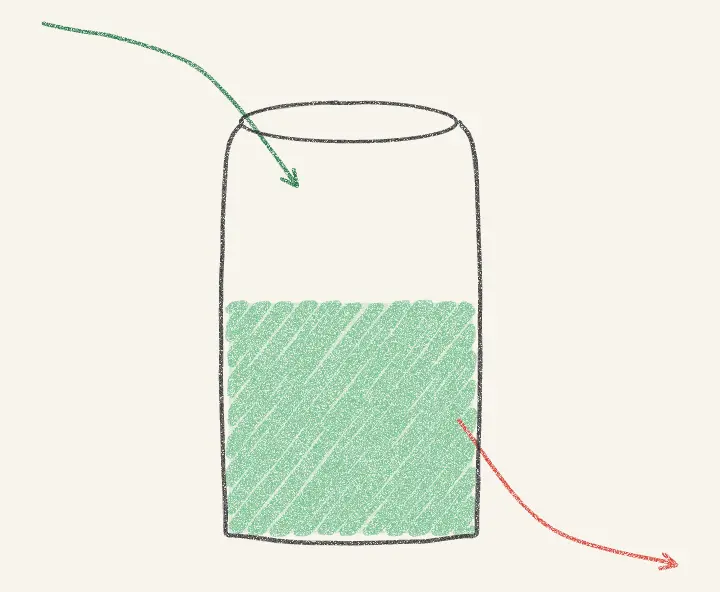
Profit is an accounting number, full of estimates. Free cash flow is the cash actually left over after the business has paid to run and to grow.
Start with the cash the business brings in from its operations. Then take away what it spends on new equipment, called capital spending.
Lemon Co brought in $2.2 million and spent $1 million on new stands. That leaves $1.2 million of free cash, a bit less than its $1.5 million profit.
Free cash flow yield is free cash flow divided by the value of all the shares. For Lemon Co: $1.2 million divided by $30 million is 4%. Here higher means cheaper: more cash for each dollar you pay.
If profits keep rising while free cash stays low for years, ask where the money goes. Cash is much harder to dress up than profit.
Quick question
A company reports rising profits, but its free cash flow has been negative for years. What should you do first?
- Buy, profits are rising
- Find out where the cash goes
- Ignore it, cash flow is noise
Show the answer
Find out where the cash goes
Sometimes it is heavy investment that will pay off. Sometimes profits are being flattered. Only the cash flow statement tells you which.
Keep this one
Profit is an opinion. Cash is a fact.
Where this comes from
Free cash flow is usually defined as cash from operations minus capital expenditures, both taken from the cash flow statement. Lemon Co is invented for teaching.