Lesson 3 of 12 · 3 min · Valuation
EV/EBIT: the whole business
Debt is part of the price, even if the share price hides it.
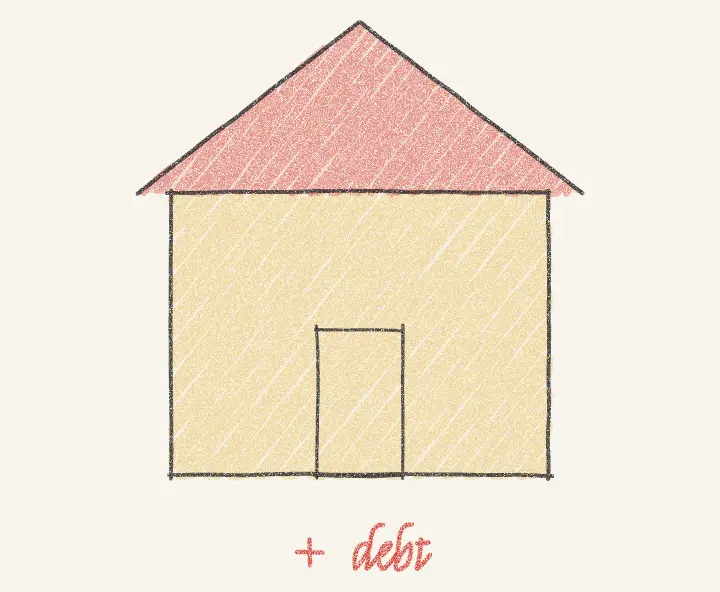
The P/E only looks at the shares. But if you bought the whole company, you would also take on its debts, and get to keep its cash.
That full price is the enterprise value, or EV: the value of all the shares, plus the debt, minus the cash.
EBIT is operating profit: what the business earns before interest and taxes. It shows how good the business is, no matter how it is financed.
For Lemon Co, $35 million divided by $2.5 million is 14. You pay 14 years of operating profit for the whole business, debts and all. Like the P/E, lower means cheaper.
This is why many investors prefer EV/EBIT to the P/E. Two companies can have the same P/E, and one of them can be carrying far more debt.
Quick question
Two companies have the same share price and the same profit. One has lots of debt, the other lots of cash. Which has the higher EV/EBIT?
- The one with debt
- The one with cash
- They are the same
Show the answer
The one with debt
Debt adds to the enterprise value and cash takes away from it. Same profit, bigger EV, so a higher EV/EBIT.
Keep this one
Price the whole business, debts included.
Where this comes from
Joel Greenblatt built his “magic formula” on EV/EBIT in “The Little Book That Beats the Market”, 2005. Lemon Co is invented for teaching.