Lesson 3 of 7 · 3 min · Compounding
Ten years that beat thirty
Two savers, one head start.
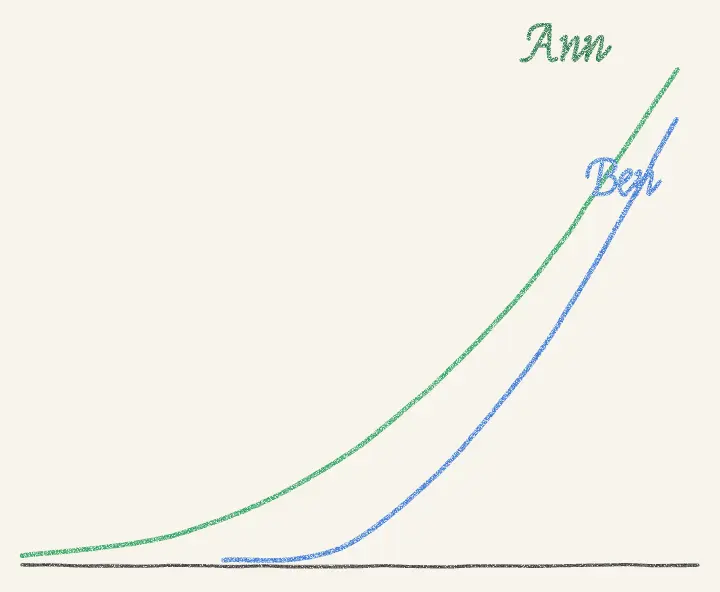
Ann puts $2,000 into the stock market every year from age 25 to 34. Then she stops, and never adds another dollar.
Ben waits. He puts in $2,000 a year from 35 all the way to 64. Thirty years, three times as much money.
Both earn 7% a year. At 65, Ann has about $225,000. Ben has about $202,000. Ann paid in a third as much, and still ends up ahead.
The reason is time. Ann’s first $2,000 compounds for 40 years. At 7% money doubles about every ten years, so that $2,000 grows to about $30,000.
Starting late is still far better than never. Ben did well. But every year you wait is a doubling you might miss at the end.
Quick question
Ann invests $20,000 early, Ben invests $60,000 later. Why can Ann end up with more?
- She picked better stocks
- Her money had more years to compound
- She paid lower fees
Show the answer
Her money had more years to compound
Same return, same stocks. Ann’s money simply had ten more years to grow, and the last years of compounding are the biggest.
Keep this one
Time does more than money.
Where this comes from
A worked example: $2,000 invested at the start of each year, 7% a year, counted at age 65. Real returns vary from year to year.