Lesson 4 of 7 · 2 min · Costs
The 1% that takes a third
Why a small yearly fee is not small at all.
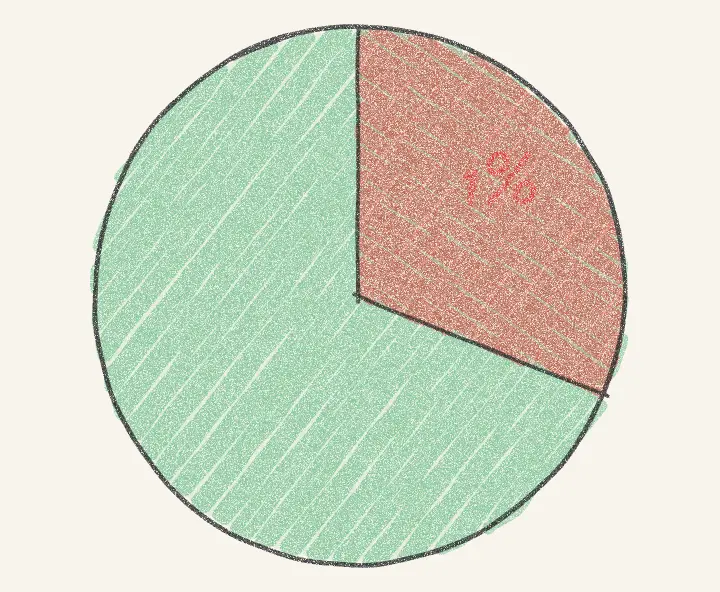
A fund fee of 1% a year sounds tiny. It is charged on everything you have, every single year, not just on your gains.
Put $10,000 away for 40 years at 7% a year. With no fees you end up with about $150,000. With a 1% fee, about $103,000.
The missing $47,000 went to the fund. You took all of the risk, and still gave up almost a third of the result.
A broad index fund can cost 0.03% a year. That is $3 on every $10,000, and it leaves almost all of the growth with you.
Quick question
Two funds hold the same stocks. One charges 1% a year, the other 0.1%. Which should you expect to end up with more?
- The 1% fund, you get what you pay for
- The 0.1% fund
- They end up the same
Show the answer
The 0.1% fund
Same stocks, same returns before costs. Every bit of fee comes straight out of what you keep.
Keep this one
Fees compound too, against you.
Where this comes from
Our own arithmetic, with the fee taken off the return. The principle is William Sharpe’s “The Arithmetic of Active Management” (1991): before costs the average investor earns the market, after costs less.