Lesson 4 of 5 · 3 min · Behavior
Why the best do worse next year
Great results are part skill, part luck. The luck does not repeat.
Daniel Kahneman once taught flight instructors in the Israeli Air Force. One told him praise does not work: praise a cadet for a clean maneuver, and the next try is usually worse.
And yelling works, he said: scream at a sloppy one, and the next try is usually better. Kahneman saw that neither was true. The cadets were simply drifting back toward their normal.
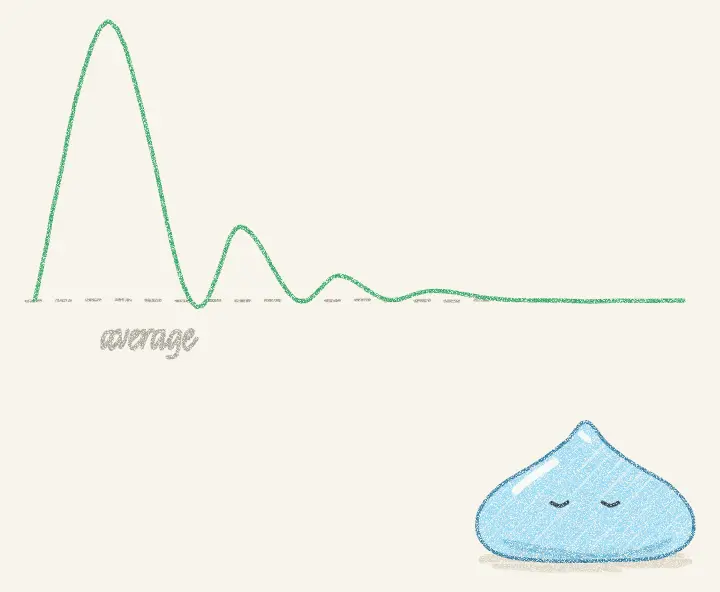
Any result that mixes skill and luck works like this. A top score usually had good luck on top of the skill. Next time the skill stays, but the luck is new.
Funds show it every year. Rank forty funds this year, then look at the same funds next year. The best and the worst both drift back toward the middle.
S&P Dow Jones Indices tracks this in its Persistence Scorecard. Very few funds that make the top quarter one year are still there a few years later.
So be careful with last year’s winner, a star manager, or a stock that just doubled. Ask how much was skill, and how much was a lucky year.
Quick question
A fund was the best of 500 funds last year. What should you expect next year?
- It stays near the top
- It lands closer to the middle
- It drops to the bottom
Show the answer
It lands closer to the middle
Being number one usually takes skill and a lucky year. The luck resets, so the next result tends to sit closer to average. Not at the bottom, just less special.
Keep this one
Luck does not repeat. Skill might.
Where this comes from
Daniel Kahneman, “Thinking, Fast and Slow”, 2011, chapter 17. S&P Dow Jones Indices, U.S. Persistence Scorecard, published twice a year. The fund ranks drawn here are made up to show the pattern.