Lesson 4 of 10 · 3 min · Mind
Affect labeling: name it to tame it
Putting a feeling into one word turns its volume down. Brain scans show it happening.
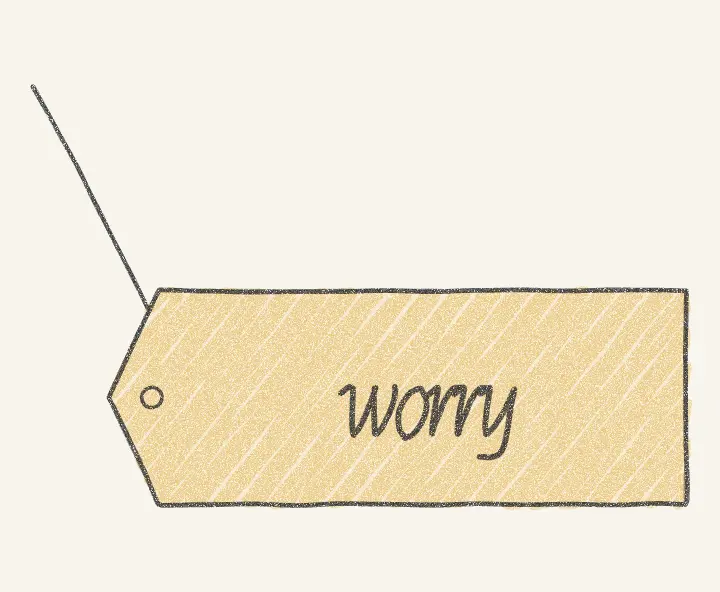
When a feeling hits hard, the mind races to explain it, fix it or push it away. There is a smaller first step: give it a name.
In 2007, Matthew Lieberman’s lab at UCLA showed people photos of angry and scared faces in a brain scanner. When they picked a word for the feeling, the amygdala, the brain’s alarm, reacted less than when they only labelled whether the face was a man or a woman.
At the same time, a region behind the forehead on the right side became more active. The more it lit up, the quieter the alarm got.
It works outside the scanner too. People afraid of spiders who put their fear into words while facing a live spider had less of a body reaction to it a week later than people who told themselves it was safe, looked away or just faced it. How scared they said they felt was about the same.
The better the word fits, the more it helps. Not only bad, but tense, embarrassed, lonely or tired. A name you can say gives you something to hold on to.
Try it now, quietly: this is worry. Or: I notice I feel tense. Then stop there. You do not have to solve it in the same breath.
Quick question
In the 2007 brain study, what turned the brain’s alarm down?
- Looking away from the faces
- Picking a word for the feeling
- Thinking of something happy
Show the answer
Picking a word for the feeling
Choosing an emotion word for a face lowered the amygdala response compared with labelling the face as a man or a woman.
Keep this one
Name the feeling. One word is enough.
Where this comes from
Lieberman, Eisenberger, Crockett, Tom, Pfeifer and Way 2007, Psychological Science 18 (Putting feelings into words). Kircanski, Lieberman and Craske 2012, Psychological Science 23 (Feelings into words: contributions of language to exposure therapy; 88 people, body reaction measured as skin conductance).