Lesson 10 of 12 · 3 min · Valuation
Which way is better?
For some numbers lower is better, for others higher. Mix them up and every verdict flips.
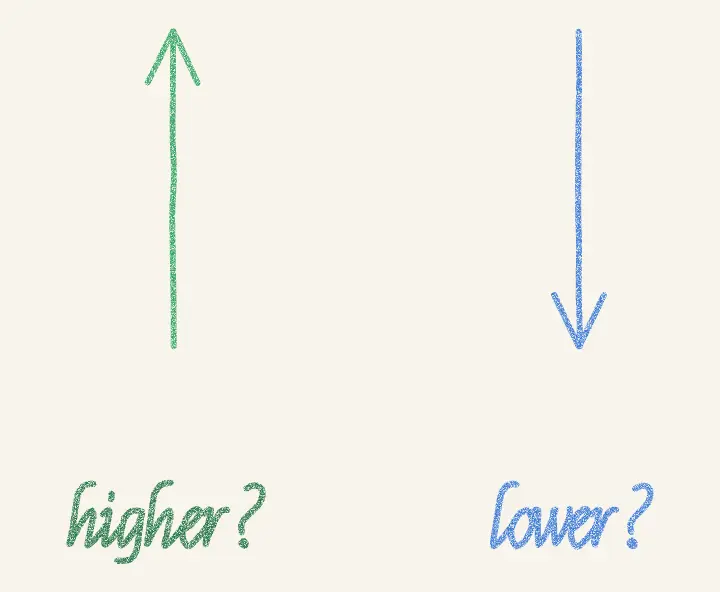
Every number in this path points one way. A P/E of 20 is not good or bad by itself. First you need to know which direction counts as better.
P/E and EV/EBIT are price divided by profit: what you pay for each dollar the business earns. So lower means cheaper. At a P/E of 10 you pay $10 for $1 of profit; at 20, you pay $20.
Yields turn the same fraction upside down: profit divided by price. So for yields it is the other way around, higher means cheaper. A P/E of 20 is an earnings yield of 5%.
Quality and safety numbers are simpler. Return on capital, margins and interest cover: higher is better. Net debt to operating profit: lower is safer. Share count: falling is good for you.
Here is the whole cheat sheet. Keep it next to any stock page until it is second nature.
Cheaper is not always better. A low P/E can mean profits are about to fall, or that last year had a one off gain. A company in a boom often looks cheapest right at its peak.
And when a company makes a loss, P/E means nothing at all. Then look at cash flow, or at what it earned in normal years.
Quick question
All else equal, which of these makes a stock look cheaper?
- A higher P/E
- A higher free cash flow yield
- A higher EV/EBIT
Show the answer
A higher free cash flow yield
Multiples like P/E and EV/EBIT are price over profit, so higher means pricier. A yield is profit over price, so higher means cheaper.
Keep this one
Know which way is good.
Where this comes from
Standard definitions. Multiples are price over profit, yields are profit over price. Lemon Co is invented for teaching.