Lesson 1 of 5 · 3 min · Filings
Customer concentration: when one customer is the business
Why companies must name a share of sales above 10%, and what that tells you.
Some companies sell to thousands of customers. Others sell mostly to one. If that one walks away, much of the business walks with it. This is called customer concentration.
US accounting rules make it visible. When one customer brings in 10% or more of sales, the company must say so in its annual report, with the amount. It does not have to name the customer, but many do.
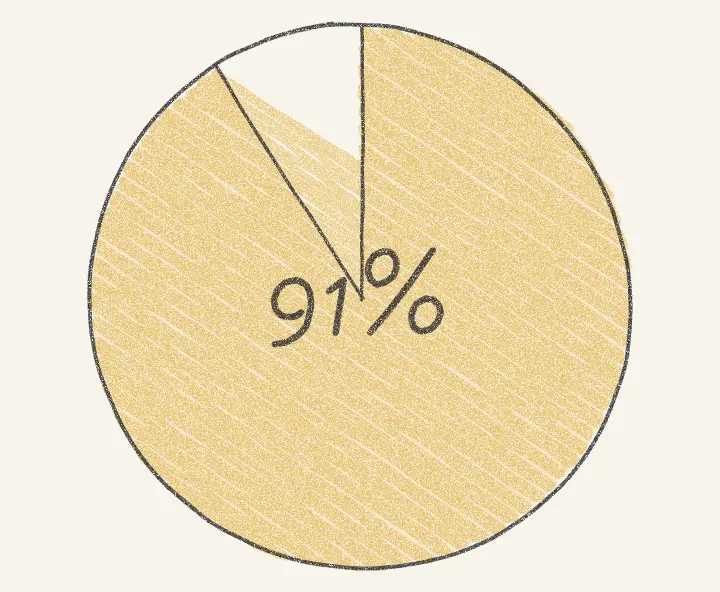
Cirrus Logic makes audio and power chips used in iPhones. In its annual report for fiscal 2026, one customer, Apple, made up about 91% of its sales. Two years before, it was 87%.
It is not only chip makers. Walmart bought 26% of everything Clorox sold. Procter & Gamble sells to thousands of stores, yet Walmart took about 16% of its sales and its ten largest customers about 43%.
A big customer is not bad in itself. It can mean a product nobody else makes as well. But it hands that customer power: it can push prices down, and losing one contract can cut sales in half overnight.
What to check: how large the biggest customer is, whether its share is growing, and how long its contracts run. On Ryufin, a company’s business page lists the customers named in its filings.
Quick question
A company says one customer brought in 12% of its sales, but does not say who. Is that allowed?
- No, the name is required
- Yes, the rule asks for the fact and the amount
- Only below 20%
Show the answer
Yes, the rule asks for the fact and the amount
The rule asks for the fact, the amount and which part of the business made the sales. Naming the customer is optional, though many companies do it.
Keep this one
One big customer is one big risk.
Where this comes from
US GAAP, ASC 280-10-50-42 (major customers). Cirrus Logic 10-K for fiscal 2026 (Apple about 91%, 89% and 87% of net sales over three years); Clorox 10-K for fiscal 2026 (Walmart 26%); Procter & Gamble 10-K for fiscal 2026 (Walmart about 16%, top ten customers about 43%).