Lesson 12 of 12 · 5 min · Valuation
Putting it all together
Lemon Co, judged step by step: every number, which way is good, and against what.
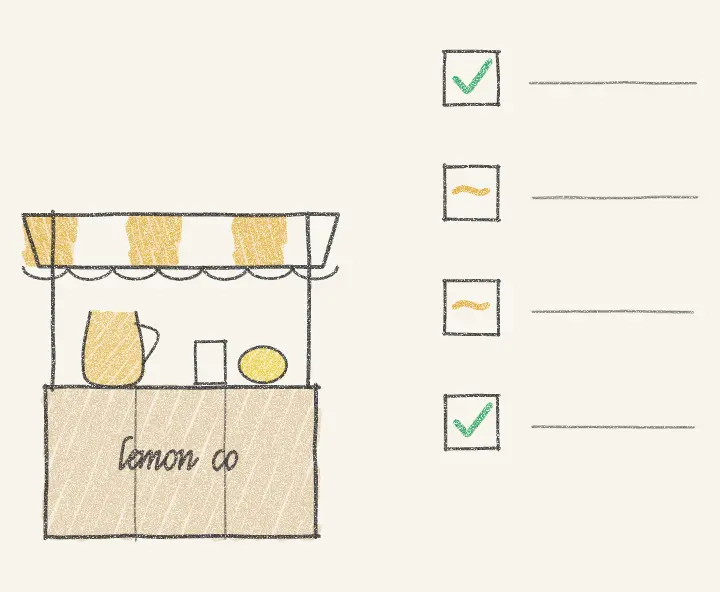
The full check is four questions, always in this order. Is it a good business? Is it safe? Is the price fair? And what has to go right?
One, quality. Higher is better here. Return on capital: 15% against 10% for its rivals. Operating margin: 20% against 14%. Lemon Co is clearly the better business.
Two, safety. Lower debt is safer. Net debt is 2 times operating profit, against 1.5 for rivals, so a bit more debt. Interest is covered 5 times, which is comfortable. Safe enough, but watch the debt.
Three, price. For multiples lower is cheaper, for yields higher is cheaper. P/E 20 against 17, EV/EBIT 14 against 12, free cash flow yield 4% against 5%. On every measure Lemon Co costs more than its rivals, roughly a sixth to a quarter more.
Is the premium deserved? Its returns are half again as high as its rivals’, and its margins are higher too. Paying a sixth or a quarter more for that is reasonable. Against its own past, a P/E of 20 is only a little above the usual 18.
Four, what must go right. The earnings yield is 5%. For about 9% a year, profits must grow about 4% a year. Sales grew about 6% a year over the last five years, so 4% asks for less than its track record.
The verdict: a better than average business at a somewhat higher price. The premium is backed by quality, and the growth it needs is below its record. Reasonable to own, not a bargain.
Last, write down what would change your mind. At $22.50 a share the P/E would be 15, below its rivals, and it would need only about 2% growth. If growth stalls below 4%, or debt keeps rising, the case gets weaker.
This is how every stock page on Ryufin is built: the same questions, the numbers from the company’s own filings, and a peer median beside them.
Quick question
A company has a 25% return on capital, almost no debt, and a P/E of 80. Its peers trade at 25. What is the most sensible verdict?
- Great business, so buy at any price
- Great business, but the price assumes years of fast growth
- Bad business, avoid
Show the answer
Great business, but the price assumes years of fast growth
Quality and price are separate questions. At a P/E of 80 the earnings yield is barely over 1%, so profits have to grow fast for many years just to earn a normal return.
Keep this one
Quality, safety, price, then growth.
Where this comes from
The check follows this path: quality, safety, price, growth, each against peers and the company’s own past. Lemon Co, its rivals and its history are invented for teaching; the growth shortcut is from the lesson on what is priced in.